


My own spiritual journey has taken me through what most would call traditional denominational Christianity, into the Word of Faith movement, and later into a much deeper appreciation of the Hebraic roots of Christianity. In more recent years, my search for truth has also led me into broader spiritual exploration and into writings and ideas I probably would not have considered earlier in life. For a time, some of these paths seemed separate from one another, and occasionally even contradictory. Yet as I look back, I have begun to wonder whether they were actually leading me away from Scripture at all. Perhaps, in ways I did not recognize at the time, they were preparing me to look more deeply into it.
That has raised a question that has increasingly become important to me: What if we have been reading the Bible too shallowly?
There are many Bible teachers out there but not many getting into the symbolism and how to specifically see the relevancy to our lives. This is why I am writing on it the way I do. So many years I thought to myself, how does this apply to my life.
I do not mean that the historical stories, moral teachings, or traditional interpretations have no value. I mean something quite different. What if Scripture can be true on more than one level at the same time? What if a story can speak about an event, a people, and a time in history while also describing something taking place inside the human being? What if the Bible is not only telling us what happened to them, but also showing us what is happening in us?
For most of my life, I read Scripture primarily as I had been taught to read it. Adam and Eve were people who lived long ago. Noah built an ark. Abraham traveled to a new land. Jacob wrestled with an angel. Joseph was betrayed by his brothers. Israel escaped Egypt. Jonah was swallowed by a great fish. Jesus died and rose again. The discussion usually centered on whether these things literally happened, when they happened, and what doctrines should be built around them. Believers defended the stories while skeptics questioned them. But somewhere between those two positions is another question that is seldom asked: What do these stories reveal about the human soul?
When we dream, we instinctively understand that the images may mean more than their literal appearance. A house in a dream may represent our inner life. A journey may symbolize growth. Water may represent cleansing, chaos, renewal, or transformation. A threatening person may represent something within ourselves that we have not faced. Dreams communicate through images, symbols, situations, and stories.
The Bible often communicates in much the same way. Scripture is filled with dreams, visions, parables, poetry, metaphors, symbolic numbers, mountains, deserts, rivers, gardens, kingdoms, battles, deaths, and resurrections. Joseph interpreted dreams. Daniel interpreted visions. Ezekiel saw extraordinary symbolic scenes. The prophets acted out messages. Jesus repeatedly taught through parables. The book of Revelation presents one symbolic image after another. Perhaps we should not be surprised if other biblical stories contain layers beyond their surface meaning as well.
The more I have explored this possibility, the more the Bible has begun to look like a map of the inner human journey.
Adam and Eve can be read not only as the story of humanity’s beginnings, but also as a picture of our awakening into self-consciousness—the moment innocence gives way to judgment, shame, fear, and separation. Cain and Abel can become more than two brothers; they can reveal the struggle within us between love and resentment, trust and comparison, humility and wounded pride. Noah and the flood can speak of those times when the old structures of our lives are overwhelmed and something within us must be preserved while the rest is washed away.
Jacob wrestling through the night can become the story of every person who has struggled with God, with life, and with himself and has emerged changed—perhaps even carrying a symbolic limp as a reminder that genuine transformation leaves us different from the person who entered the struggle. Joseph’s descent into the pit, slavery, and imprisonment can speak to those seasons when betrayal and suffering appear meaningless, only for us to later discover that something was being formed in us that could not have been formed any other way.
Egypt can become more than an ancient nation. It can symbolize bondage within us. Pharaoh can represent that stubborn inner ruler that refuses to surrender control even when we know change is necessary. Moses can represent the call toward freedom. The Red Sea can become the place where there is no going back. The wilderness can represent the uncomfortable period between the old life and the new one, when what once sustained us is gone but what is coming has not yet fully appeared.
The Promised Land can then become more than territory on a map. It can represent a different way of being—a life increasingly governed by trust rather than fear, awareness rather than unconscious reaction, and love rather than self-protection. Even then, the story reminds us that entering the land does not mean every inner enemy has disappeared. There are still battles to be fought.
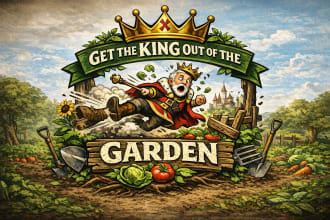
The period of the Judges reveals another familiar pattern. We awaken, forget, suffer the consequences, cry out, return, and then gradually forget again. Anyone who has seriously tried to change himself probably recognizes that cycle. The united kingdom under Saul, David, and Solomon can suggest the possibility of greater inner order, while the later division between Israel and Judah becomes an extraordinary picture of the divided human heart. Part of us wants one thing while another part wants something entirely different. We seek peace while feeding anxiety. We desire love while protecting resentment. We speak of surrender while quietly insisting on remaining king of our own inner kingdom.
Perhaps this is one reason the idea of the kingdom becomes so important in the teachings of Jesus. We often think of kingdoms politically or geographically, but Jesus repeatedly directs attention toward something much closer to us. He speaks of seeds growing quietly, treasure hidden in a field, lamps that must be kept burning, servants awaiting their master, weeds growing among wheat, and eyes that see without truly seeing. These images invite us to look beneath the surface.
Jonah is another example. On the surface, it is the extraordinary story of a reluctant prophet, a storm, a great fish, and the city of Nineveh. Inwardly, Jonah can also become the story of what happens when we run from the thing we know we must face. We descend. Jonah goes down to Joppa, down into the ship, down into sleep, and finally down into the depths of the sea. Yet the place that appears to be his destruction becomes the very place where transformation begins. Sometimes what feels like the darkest period of our lives becomes the womb from which something new is born.
Even resurrection can be contemplated in this way without denying its traditional Christian meaning. Resurrection becomes not only something we look backward toward or forward toward, but a pattern that can occur repeatedly within our lives. Something false dies. Something more truthful rises. An old identity falls away. A deeper awareness emerges. Fear loses some of its authority. Forgiveness replaces resentment. The person who entered the experience is not quite the person who comes out of it.
This way of approaching Scripture is not something newly invented. For centuries, Jewish teachers, Christian mystics, contemplatives, theologians, and spiritual seekers have recognized that sacred writings can contain several levels of meaning. A passage can have a plain meaning and at the same time invite moral, symbolic, and spiritual interpretation. Jesus himself often ended teachings with words similar to, “Whoever has ears to hear, let them hear.” That statement suggests that hearing words and understanding what they point toward may be two very different things.
Perhaps this also helps explain why the same passage can mean almost nothing to us at one stage of life and then suddenly become deeply meaningful years later. The words did not change. We did.
This has become increasingly important to me. I no longer see the Bible merely as a book giving us information about God, ancient Israel, Jesus, heaven, sin, and salvation. I have begun to see it as something closer to a mirror. When we look deeply enough, we begin seeing ourselves in its pages. Pharaoh is not only out there. Cain is not only out there. The frightened Israelites are not only out there. The Pharisee, the prodigal son, the doubting disciple, the wounded traveler beside the road, the elder brother, the woman at the well, and even the crowd crying one thing today and another tomorrow can all be found somewhere within the human heart.
This is where the Bible becomes very personal.
The question is no longer simply, “What did these people do?” It becomes, “Where does this same pattern exist in me?” Instead of merely asking why Pharaoh would refuse to let Israel go, I can ask what I refuse to release. Instead of criticizing Israel for repeatedly forgetting God, I can notice how quickly I fall back into my own mechanical habits. Instead of condemning the disciples for falling asleep, I can ask how often I go through life spiritually asleep. Instead of wondering why people could not recognize what was directly in front of them, I can ask what I myself may be unable to see.
That changes Scripture from something we merely believe into something we can observe and live.
It also fits with something I have been learning through the practice of self-observation. Much of what we call “myself” is not one unified person. Different parts of us appear under different circumstances. One part is frightened, another angry, another compassionate, another defensive, another generous, another controlling. One moment we are certain of something, and an hour later another part of us has taken the throne. Scripture is filled with kings, kingdoms, battles, competing voices, faithful servants, rebellious subjects, wildernesses, temples, and divided loyalties. Perhaps some of these images are describing the landscape of the human interior more accurately than we ever realized.
Then the question becomes one I have returned to many times: What is sitting on the throne within me right now? Is it fear? Pride? Anger? The need to be right? The desire for approval? Or is there something deeper within us—a place of conscience, truth, love, humility, and awareness—that can increasingly become the center from which we live?
Perhaps this is part of what spiritual awakening actually means.
It may not mean collecting more beliefs. It may mean becoming conscious of what is already happening within us.
It may not mean escaping the human experience. It may mean entering it more deeply.
It may not mean becoming certain that we possess all truth. It may mean becoming humble enough to recognize how much more there is to discover.
I certainly do not claim to have all the answers. If anything, the older I become, the more comfortable I am admitting how much I do not know. But I have also discovered that questions asked sincerely and humbly often open doors that certainty keeps closed. My prayer for many years has essentially been, “Father, I want to know the truth, even if it changes the way I believe.” I have found that this can be a dangerous prayer, because sometimes the truth does change the way we believe.
But perhaps that is the point.
So in the articles that follow, I want to continue exploring familiar biblical stories with fresh eyes. We can ask what is happening outwardly in the story, what symbols or patterns appear, what those symbols might reveal inwardly, and how the story may illuminate our own journey through life. We do not have to throw away the historical meaning to discover the inner meaning. One does not necessarily cancel the other.
Perhaps Scripture is large enough to contain both.
And perhaps the greatest treasures in the Bible have not been hidden from us at all.
Perhaps some of them have been hidden for us, waiting until we have the eyes to see them.
As deeply as we may go in these articles, I suspect we will still only be scratching the surface. Eventually this becomes a personal journey that no teacher, church, book, or article can take for us. Each of us must begin looking inward and asking what these ancient stories are revealing in our own lives.
The Bible may indeed tell the story of humanity.
But perhaps, in a mysterious way, it is also telling your story.
And mine.
Maybe that is why, thousands of years later, it is still alive.
Here is a YouTube link from someone talking about Bible Symbolism.
Coming Next: Dreams
Why Dreams May Hold the Key to Understanding Scripture
What if the same symbolic language found in dreams is the very language through which much of the Bible speaks?
Hidden FOR us. What a beautiful philosophical
Question. Thank you