

In the previous part, we stood with John the Baptist beside the Jordan River, where people entered the water as a sign that they were ready to leave an old way of living behind. John could call people to repentance, and the water could symbolize cleansing, surrender, and a new beginning, but John also made it clear that something greater was coming. Water could wash the surface, but the Spirit would have to awaken the life within. That deeper awakening is at the heart of one of Jesus’s most familiar and most misunderstood teachings: “You must be born again.”
For many Christians, being born again has come to mean accepting a certain set of beliefs, saying a prayer, joining a church, or remembering a particular moment of conversion. Such moments can be sincere and life-changing, but Jesus appears to have been pointing toward something much deeper than receiving a religious label. He was describing an inner birth—a transformation in which a person begins to see, think, and live from a new center of consciousness.
A Teacher Who Still Could Not See
The teaching comes during a nighttime conversation between Jesus and Nicodemus, a respected religious leader. Nicodemus knew the Scriptures, understood the traditions, and had likely spent much of his life trying to serve God faithfully. Yet he came to Jesus at night. On the surface, this may have been because he did not want to be seen, but symbolically the setting tells us something more. Nicodemus was spiritually searching in the darkness. He possessed religious knowledge, but something within him still could not see clearly.
Jesus did not criticize him for asking questions. Instead, he went directly to the heart of the matter: “Unless one is born again, he cannot see the kingdom of God.”
Nicodemus immediately interpreted the words literally. How could an adult return to the womb and be born a second time? His response sounds almost foolish until we recognize ourselves in it. The human mind naturally tries to understand spiritual truth through physical images, fixed beliefs, and familiar categories. Nicodemus could understand birth as a biological event, but he could not yet imagine birth as an awakening of the soul.
Jesus was showing him that religious knowledge alone is not enough. We may know Scripture, attend worship, defend doctrine, and still see life through fear, pride, resentment, judgment, and self-protection. We may speak about the kingdom of God while remaining unable to perceive it. The problem is not that we lack more information. The problem is that the part of us interpreting the information has not yet been transformed.
Born of Water and Spirit
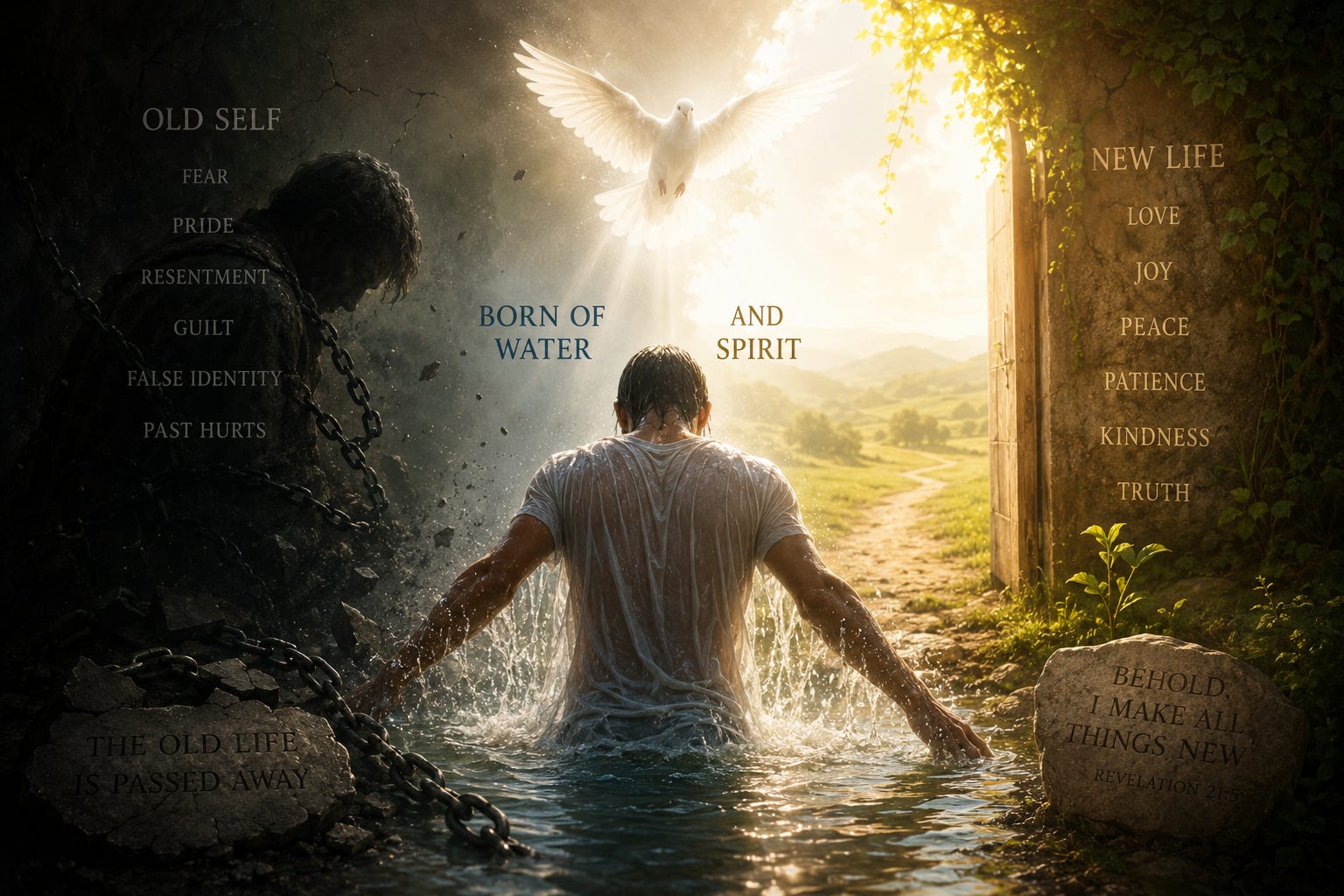
Jesus continued, “Unless one is born of water and the Spirit, he cannot enter the kingdom of God.” Water and Spirit together form a powerful image. Water cleanses, softens, and carries away what has been released. Spirit gives life, breath, direction, and inward movement. Water represents the willingness to let go of the old; Spirit represents the new life that begins when we make room for God within us.
This does not make literal baptism unimportant. The outward act can be a beautiful and meaningful expression of commitment. But the symbol is never meant to replace the inner reality. A person can go beneath the water and rise physically unchanged in consciousness. The outer ritual becomes spiritually alive only when something within us is also willing to die and be reborn.
To be born of water is to allow the hardened parts of the self to be softened. It is to let old guilt, bitterness, false identity, and inherited fear begin to wash away. To be born of Spirit is to discover that our deepest identity is not the anxious, defensive personality we have spent years protecting. Beneath that constructed self is something more enduring: the image of God, the divine breath, the inner light that has been present all along but has often been buried beneath habit, conditioning, and fear.
The first birth gives us a body and a place in the world. The second birth awakens us to why we are here.
The Death of the Old Identity
Every birth requires leaving one world and entering another. An unborn child cannot remain in the womb and also begin life outside it. In the same way, spiritual rebirth asks us to leave behind an identity that once gave us security. This is why being born again can be both beautiful and unsettling.
The old self is built from the stories we have accepted about who we are. It is shaped by family expectations, religious teachings, painful experiences, social roles, successes, failures, and the opinions of others. Much of this identity is necessary while we are growing, but eventually it can become a kind of enclosure. We begin to confuse the walls around us with the whole of reality.
Jesus was not asking Nicodemus to become less sincere or less devoted. He was inviting him to move beyond the identity of the religious expert and become a spiritual child again—open, teachable, humble, and willing to enter mystery. Nicodemus had spent his life becoming somebody. Jesus was asking him whether he was willing to release that somebody long enough to discover who he truly was.
This is where the teaching becomes personal. What part of us is afraid to be reborn because it does not want to lose control? What belief have we defended because our identity depends upon it? What resentment have we carried so long that we no longer know who we would be without it? What role have we played for others even though the life has gone out of it?
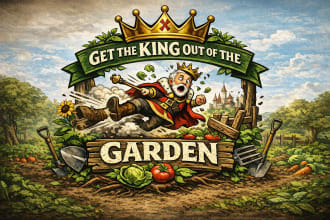
The ego does not object to religion as long as religion allows it to remain in charge. It will gladly become more knowledgeable, more certain, more respected, or more righteous. What it resists is surrender. Spiritual birth begins when the false king within us is no longer allowed to rule the garden. If you have read many of my posts, you will quickly see that I have a strong emphasis on quelling our ego. Our ego can rule us if we let it, while not allowing spiritual growth to occur, as it does not like relinquishing control. It’s like the old indian story about there being a white and a black wolf. The one we feed more is the dominant one; it’s the same with our ego.
The Wind Blows Where It Will
Jesus compared the work of the Spirit to the wind: “The wind blows where it wishes, and you hear its sound, but you do not know where it comes from or where it goes.” We cannot control the wind, hold it in our hands, or force it to follow our plans. We recognize it by its movement.
The same is true of the Spirit. We may not always be able to explain what is happening within us, but we begin to notice the effects. A person who once needed to win every argument becomes able to listen. Someone who carried an old wound begins to forgive. Fear loosens its grip. Compassion grows. Truth becomes more important than appearances. We become less concerned with proving that we are right and more concerned with becoming real.
This inner movement may begin during a church service, a quiet prayer, a personal crisis, a dream, a conversation, a time in nature, or a moment when everything we once believed no longer feels sufficient. God is not limited to the places where we expect God to appear. The Spirit blows where it will.
That can be uncomfortable because the Spirit may carry us beyond the boundaries of our certainty. It may challenge beliefs we inherited but never examined. It may reveal prejudice hidden beneath respectability, fear hidden beneath anger, or pride hidden beneath religious confidence. Rebirth does not simply comfort us. It also exposes what can no longer remain if the new life is to grow.
Where Is This Birth Happening?
The kingdom Jesus spoke about was not merely a distant place we enter after death. It was a reality that could be seen and entered even now, but only through transformed perception. The kingdom may already be near, yet remain invisible to the part of us that is still asleep.
This is why Jesus said we must be born again to see it. The world may outwardly remain the same, but the eyes looking upon it become different. The person we once judged may now appear as someone carrying pain. The ordinary day may become filled with quiet meaning. The stranger may become a neighbor. The earth may no longer seem like property to be used but a living creation entrusted to our care. God may no longer be experienced merely as an authority outside us but as a presence stirring within us.
The question is not simply, “Have I been born again?” as though it were a box to be checked. A better question may be, “What is being born in me now?”
Is patience being born where irritation once ruled? Is courage being born where fear once silenced us? Is humility being born where certainty made us rigid? Is compassion being born where judgment came easily? Is truth being born where we once hid from ourselves?
Spiritual rebirth is not proven by how loudly we declare it. It is revealed by the life that follows.
Born Again Is a Beginning
Physical birth is not the completion of life; it is the beginning. A newborn must grow, learn, stumble, and gradually become mature. The same is true spiritually. A powerful conversion experience may open the door, but it does not instantly remove every fear, wound, habit, or illusion. The new life must be nurtured.
This is where many become discouraged. They may have sincerely committed themselves to God and yet still discover anger, jealousy, doubt, or selfishness within. But the presence of struggle does not mean the birth was false. It may mean the newborn spirit is beginning to grow strong enough to reveal what still needs healing.
We are born again each time we allow truth to replace illusion, love to replace fear, and surrender to replace control. There may be one great awakening, but there are also many smaller births throughout the journey. We are repeatedly invited to leave familiar darkness and step into a greater light.
Nicodemus did not appear to understand everything that night. Yet later in the Gospel, we see signs that something had begun to change. He spoke in Jesus’s defense when others were ready to condemn him, and after the crucifixion he helped care for Jesus’s body. The man who first came secretly in darkness gradually found the courage to step into the light.
Perhaps that is how rebirth often happens. Not always in one dramatic instant, but through a quiet inner movement that slowly changes the direction of a life.
The invitation of Jesus is not merely to believe that spiritual rebirth is possible. It is to enter it. To loosen our grip on the person we have been. To become teachable again. To allow the waters of surrender to carry away what is finished and the breath of Spirit to awaken what has been waiting within us.
We do not return to the womb. We awaken from the tomb of the old self.
And as that stone begins to move, we may discover that the kingdom of God was not absent. We simply had not yet been born into the eyes that could see it.
Coming Next
The Temptation in the Wilderness: Facing the Voice That Promises Power Without Transformation
Born of the water of the Mother and the Dumo the fire of the Father. The true meaning of being born again. An internal fire in the belly as part of the ascension process, purifying the heart, the path to eternal bliss.