
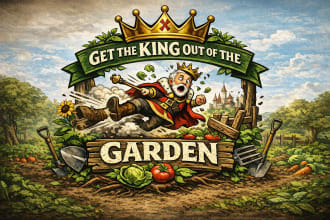


The King inside us hates many things—but nothing quite as much as being wrong.
There’s something the King inside us dislikes even more than being ignored.
Being wrong.
Not just mistaken about a fact. Not forgetting a date or mixing up a detail. The deeper kind of wrong. The kind where something we believed, defended, or even built part of our identity around turns out not to be true.
That’s when the King begins to squirm.
You can watch it happen in real time. A conversation shifts slightly, and suddenly, the King stands up from his throne. He begins searching for supporting evidence, recalling past victories, gathering arguments like weapons—anything to protect the crown.
I’ve seen it in meetings.
Someone suggests a different idea, and instead of curiosity entering the room, defenses rise like castle walls. Positions harden. Voices tighten. People begin protecting their territory rather than searching for the best answer.
But if I’m honest, I’ve seen it most clearly in myself.
There have been times when someone gently pointed out a mistake I had made. The first reaction wasn’t gratitude.
It was resistance.
My mind immediately began assembling reasons why I was still right—or at least not entirely wrong.
The King does not surrender the throne easily.
Yet some of the most important lessons of my life came from moments when I finally let that King step aside.
Farming taught me this early.
Nature doesn’t care about our opinions.
You can believe a field will dry out in time to plant. You can insist that the weather forecast must be wrong. You can tell yourself the soil is ready.
But when the tractor sinks into mud, the truth becomes obvious.
Nature quietly corrects the King.
The same thing happens in relationships, communities, and leadership. When we hold our position too tightly, we often stop listening. And when we stop listening, we stop learning.
The irony is this: being willing to be wrong is one of the fastest ways to grow wiser. It opens the door for new information, new perspectives, and new understanding.
But the King fears this because admitting error feels like a loss of status.
What the King doesn’t realize is that humility actually earns respect. People trust someone who can say, “I was mistaken.”
That simple sentence lowers walls. It invites honesty. And it turns arguments into conversations.
Over the years, I’ve noticed something interesting. The most secure people I know are not the ones who are always right. They are the ones who are comfortable being wrong. Their identity isn’t built on winning every debate; it’s built on learning.
When the King relaxes his grip on the throne, something healthier begins to grow in the garden. Curiosity quietly takes its place. Curiosity asks questions instead of defending positions. It listens before speaking and replaces the need to be right with the desire to understand.
And understanding, in the long run, produces far more wisdom than the King ever could.
The truth is, the King doesn’t really belong in the garden at all.
Gardens grow best with patience, attention, and humility—not with someone standing in the middle shouting orders and insisting he already knows everything.
Every time we admit we were mistaken, every time we listen a little longer, every time we loosen our grip on being right, we move the King a little closer to the gate.
And when that happens, the garden begins to grow again.
The ability to entertain a new thought is a profound gift!