


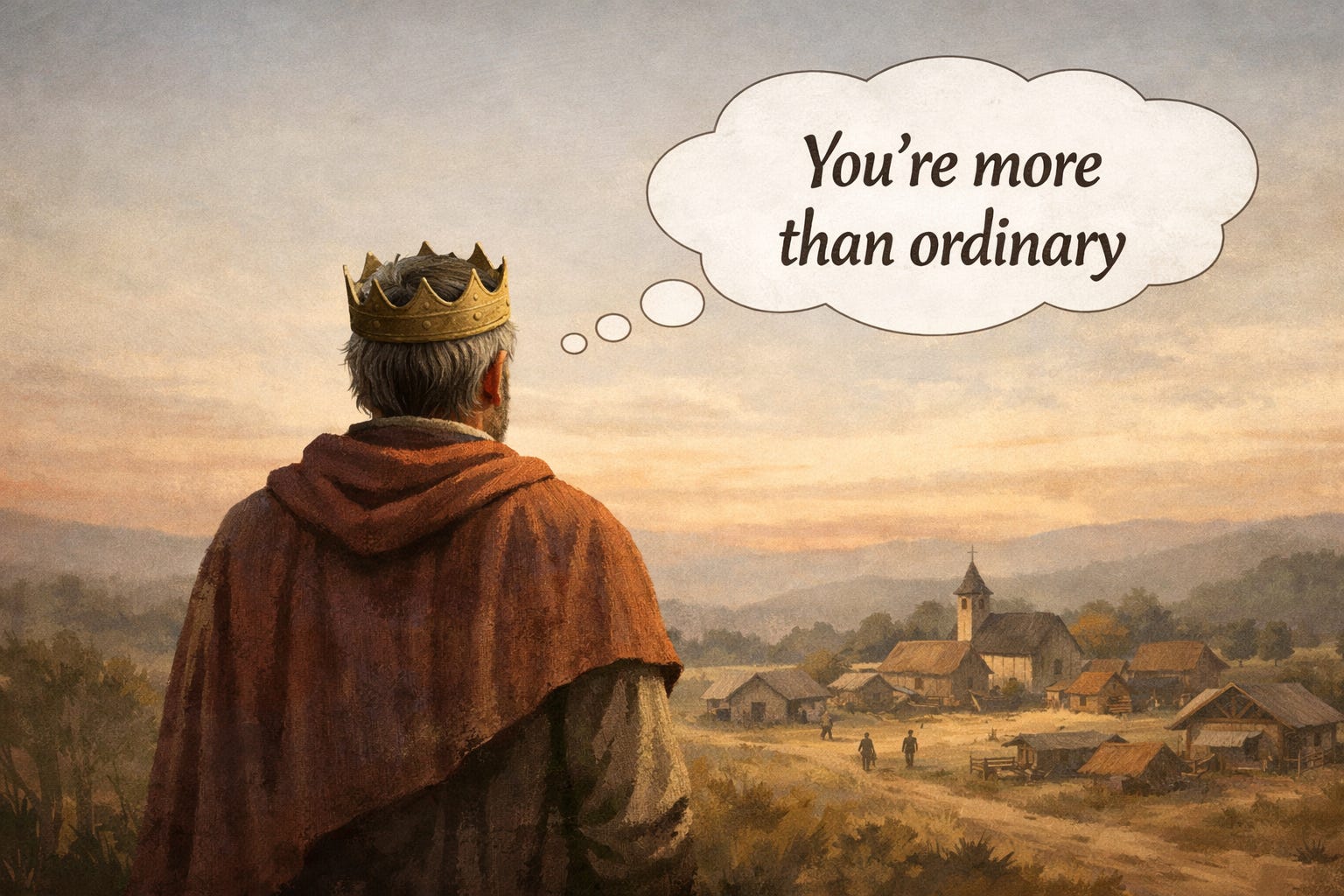
There is something deep within us that resists the idea of being ordinary. Not in a loud or obvious way, but quietly, underneath the surface, shaping how we see ourselves and how we move through the world. The King carries this especially strongly. He wants to matter. He wants to be seen as someone who stands apart, someone whose life holds a certain weight or significance.
Over the years, he has built subtle ways of reinforcing this. He compares. He measures. He looks for evidence that his story is a little more important, his experiences a little more meaningful, his understanding a little more advanced. Not always in ways that are obvious to others, but very real within himself.
I have noticed this not just in myself, but in others as well. It shows up in conversations where people steer things back to their own experiences, or where there is a quiet need to be recognized for what they know or what they have been through. You see it in leadership, in workplaces, and very clearly in public life. Many politicians, in particular, seem especially skilled at presenting themselves as anything but ordinary.
But the strange thing is, the more the King tries to elevate himself, the more separate he becomes. He begins to live slightly outside of life instead of fully in it. There is a subtle tension in always needing to be something more than what is.
I remember many years at our church when I would start a conversation with someone by asking a simple question about them. They would go on and on about the things they were doing. The interesting thing was, they never asked me what was going on in my life. It became a one-sided conversation, and it felt as though there was a need to emphasize that they were not just ordinary—or maybe they simply needed someone to recognize them. I see hints of this in social media as well, where people seem to be reaching for someone to hear them, to acknowledge that their life has meaning.
What the King does not easily accept is that there is a quiet strength in being ordinary. In fact, most of life happens there. The conversations that matter, the work that sustains others, the small acts of kindness that no one notices—these are not extraordinary by the world’s standards, yet they carry a depth that the King in us often overlooks.
I have seen this in everyday settings more than anywhere else. A neighbor helping without being asked. A spouse doing the same small things day after day without recognition. A person showing up consistently, not because it brings attention, but because it is simply what needs to be done. There is no performance in it. No need to be seen.
The irony is that when the need to be extraordinary begins to loosen, something else takes its place. There is more ease. More connection. A greater ability to appreciate what is right in front of us. Life becomes less about maintaining an image and more about participating in what is real.
The King fears being ordinary because he believes it diminishes him. But in truth, it may be the very place where he finally rests.