


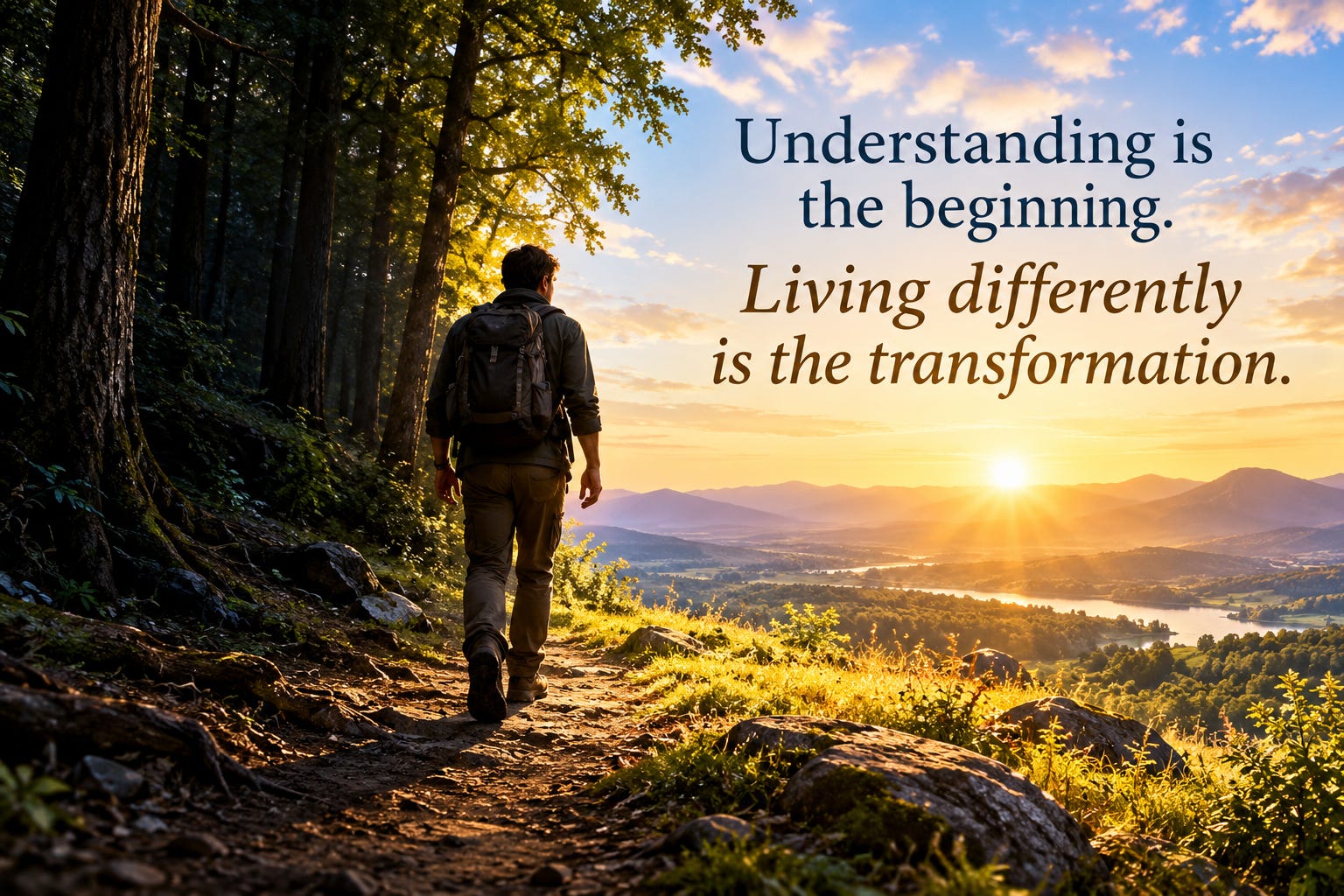
When Insight Begins to Change How We Live
Throughout this series, we have explored the influences that shape us, often without our knowing it: hidden feelings, familiar stories, and the ways the past enters the present. Last time, we considered forgiveness. Now we reach a question that matters more than any explanation we have uncovered: What changes in the way we live?
It is possible to understand ourselves quite well and still respond to life much as we always have. We may recognize a habit the moment it appears, explain where it came from, and even speak thoughtfully about it afterward. Yet when the same situation returns, the familiar words come out of our mouths. Insight has arrived, but it has not yet become a new way of being.
This is where integration begins. The word may sound complicated, but the experience is ordinary. Integration is what happens when something we have come to see inwardly begins to influence our choices outwardly. An understanding that once belonged mainly to reflection gradually becomes part of how we listen, speak, decide, and relate to other people. It is not the collection of more insights. It is the slow work of living what we already know.
Suppose we realize that we often agree to requests we do not have the time or energy to fulfill. We may understand that saying yes has become easier than risking someone’s disappointment. That realization matters, but the real test comes with the next request. Do we hear ourselves agreeing before we have considered it? Can we say, “Let me think about that,” and allow another person to be disappointed if necessary? The important change may be no larger than those few words.
Or consider a conversation in which someone disagrees with us. We may have learned that we turn differences of opinion into contests we feel compelled to win. The next time it happens, integration may mean asking one sincere question before offering our reply. We may still believe our position is sound. We may still need to stand by it. But we no longer have to make the other person’s agreement the measure of our worth. A conversation can remain a conversation.
These changes are easy to overlook because they seldom feel dramatic. We may imagine a great transformation after which an old difficulty disappears. More often, understanding must be carried into many small encounters before it becomes dependable. The familiar response has been practiced for years. A different one may need practice too.
Practice does not mean pretending we feel something we do not feel. If we are anxious, integration is not a demand to appear fearless. If we are irritated, it is not the requirement to put on a pleasant face. We begin by being truthful about what is present, and then choosing what deserves expression and what does not. We can feel discomfort without automatically passing it along. We can be firm without becoming harsh. We can admit uncertainty without treating it as weakness.
There is a danger in turning self-observation into another reason to judge ourselves. Trying to catch every thought and correct every reaction can become a kind of constant supervision. That is not freedom. Often it is enough to practice a different response in one recurring situation and let ordinary life teach us something.
For example, we might choose to notice what happens just before we interrupt someone. Perhaps we are afraid we will forget our point, or perhaps we assume we already know what the person is going to say. Instead of making a rule that we must never interrupt again, we try letting the other person finish. We discover whether listening changes the conversation. This is an experiment, not a verdict on our character.
And we will not always succeed. A familiar reaction may take over before we recognize it. Only later, perhaps while driving home or lying awake, do we see what happened. Even that later recognition can be useful if it leads to a different choice. We may return to someone and say, “I wasn’t really listening earlier. Would you tell me again?” The moment of awareness did not arrive in time to prevent the mistake, but it arrived in time to help us respond to it honestly.
Gradually, something else becomes possible. Qualities that once seemed opposed can find room together. We can be independent and still accept help. We can care about others without taking responsibility for every feeling they have. We can value peace and still address an uncomfortable problem. Becoming more whole does not mean choosing one acceptable part of ourselves and eliminating the rest. It means learning how different capacities can serve a life guided by greater understanding.
This may also change our relationships. People become accustomed to the roles we play. If we usually give in, others may be surprised when we express a preference. If we usually take charge, they may be surprised when we invite their judgment. Some will welcome the change; others may resist it. Their reaction alone cannot tell us whether we are right. We still need humility and a willingness to hear how our actions affect them.
Integration is not measured by how consistently we feel peaceful. Life continues to bring fatigue, disappointments, responsibilities, and unexpected trouble. Under pressure, older habits may return. This does not erase the progress made when circumstances were easier. The better question is whether we recognize the return a little sooner, recover our balance a little more readily, or take responsibility with less defensiveness than before. Growth may be visible first in the length of time between a reaction and a thoughtful response.
There is also a spiritual dimension to this work. We may be drawn to profound teachings, striking experiences, or new ways of understanding the sacred. Yet the value of an inner discovery becomes clearer when it touches everyday conduct. The words in James about being doers of the word rather than hearers only point toward this distinction. Whatever language we use for spiritual growth, an inward understanding that never reaches our treatment of others remains incomplete. Patience at home, fairness in disagreement, and honesty when no one is watching may reveal more than an impressive account of what we believe.
We need not make every moment into a lesson. We still need humor, rest, friendship, and simple pleasure. The purpose of looking within is not to remain there. It is to return to the world with more room to choose how we participate in it.
Perhaps the most practical approach is to take one understanding that has stayed with us and ask where it might make a difference today. Not where we can demonstrate that we have changed, but where a more honest response is available. We might listen instead of rehearsing an answer, decline a commitment we cannot fulfill, ask for help, or acknowledge a mistake without defending it. Tomorrow may bring another opportunity. Over time, these choices become less like exercises and more like our natural way of meeting life.
We need not understand everything about ourselves; some questions may never have a clear answer. Integration begins wherever understanding and action meet. The journey inward matters not because we can describe ourselves perfectly, but because we can live with greater awareness, responsibility, and care.
So the question for today might be this: What do I already know about myself that has not yet found its way into how I live? And what would one small, honest expression of that understanding look like?
Coming Next
Becoming Whole — The Journey Continues
In the final article of this series, we will bring the journey together—not as a claim that our work is finished, but as a different way of understanding wholeness, self-acceptance, and the continuing practice of living consciously.
Note: This series is intended for personal reflection and is not a substitute for mental-health care. Where patterns are connected with significant distress, trauma, or ongoing harm, professional support and practical safety measures may be important.