

The Cross brought us to the place of surrender. The old self, built upon fear, control, resentment, pride, and the need to defend its identity, was brought to the point where it could go no farther. Jesus’ final words, “It is finished,” marked the completion of one movement, but not the end of the story. After the Cross comes the tomb, and after the tomb comes something completely unexpected. What appeared to be an ending becomes a beginning.
The Resurrection stands at the very center of the Christian faith. Christians have traditionally understood it as the bodily raising of Jesus from death and as the great declaration that death itself does not have the final word. A symbolic understanding does not need to replace that belief. Instead, it asks another question: What does resurrection mean within us? If Jesus continually taught that the Kingdom of God was near, among us, and even within us, then perhaps resurrection also describes something that can begin within the human soul long before the physical body dies.
Jesus taught that whoever loses his life will find it. Paul later spoke of dying daily. A grain of wheat must fall into the ground before it can bring forth new life. Again and again, Scripture presents this same spiritual pattern: surrender before renewal, death before life, darkness before dawn. We normally try to improve the person we already are, adding better habits, better beliefs, and better behavior to the personality we have constructed. The Resurrection suggests something deeper. Sometimes the spiritual journey does not merely improve the old self. It allows something deeper and more authentic to emerge from beneath it.
Three Days in the Darkness
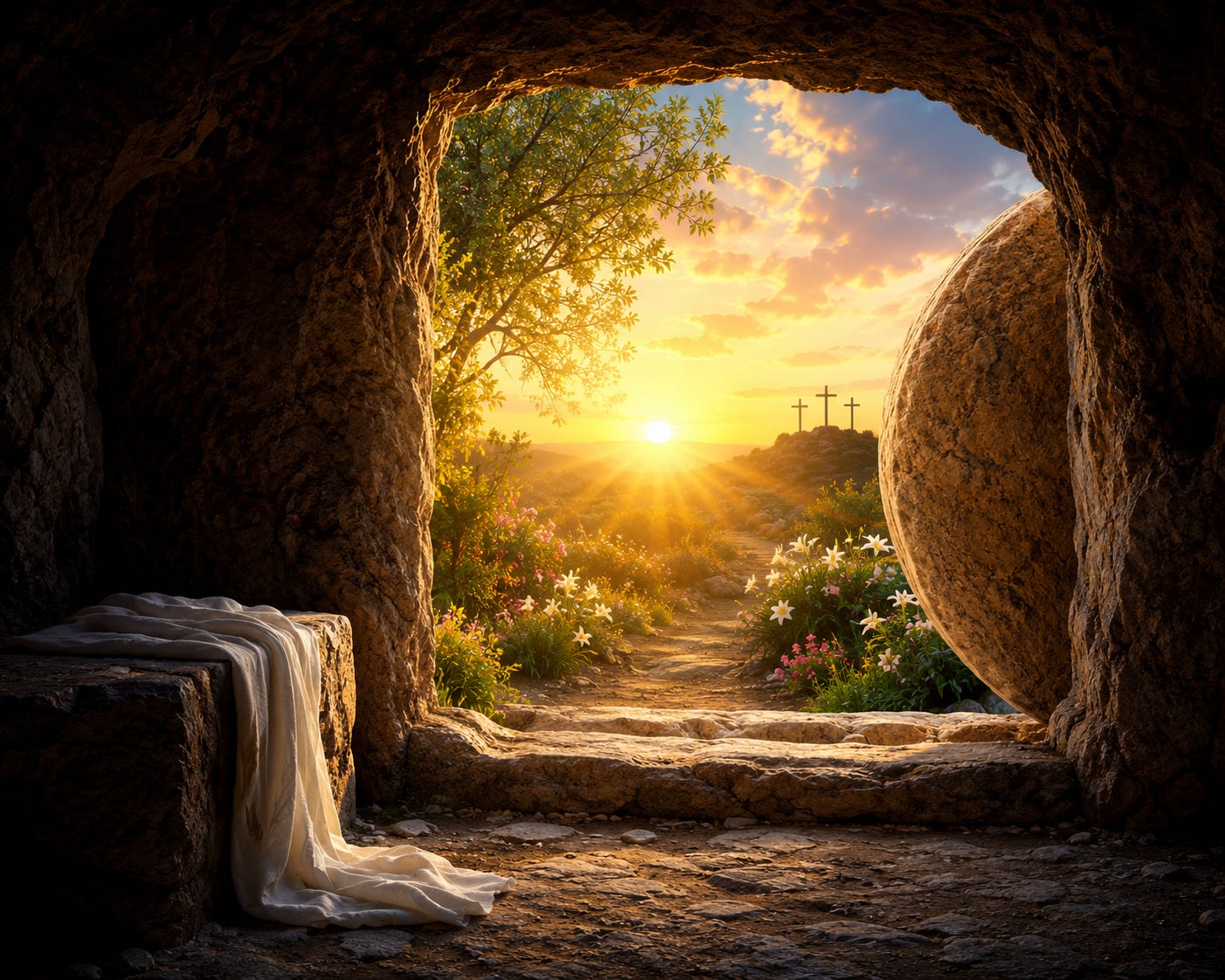
Between the Cross and the Resurrection there is silence. Jesus is placed within the tomb, the stone is rolled across its entrance, and his followers scatter in fear and confusion. Everything they believed was happening appears to have failed. Their teacher is gone. Their expectations have collapsed. From the outside, nothing seems to be occurring.
Yet something is occurring.
This is one of the most important patterns of spiritual transformation. We often expect growth to feel like constant progress. We expect increasing clarity, peace, understanding, and certainty, but many genuine transformations contain a period when nothing seems to be happening. We may have released something old, yet what will replace it has not appeared. The beliefs that once supported us may no longer satisfy us, while a deeper understanding has not yet taken shape. An identity we carried for years may begin falling away, leaving us unable to return to the person we once were but unsure of who we are becoming.
This is the tomb experience. Prayer may seem empty. God may seem distant. Answers that once came easily may no longer come. Our instinct is often to escape this place as quickly as possible. We want another answer, another teaching, another certainty—anything that restores the feeling of security we once possessed. But the tomb has its purpose. A seed does not sprout the moment it enters the soil. For a time it remains hidden beneath the surface, and from above nothing appears to be happening. Yet within the darkness the shell is breaking open. The tomb, therefore, is not necessarily abandonment. Sometimes it is incubation, a hidden place where something is being released that cannot accompany us into the next stage of our spiritual life.
The Stone Must Be Rolled Away
When the women arrive at the tomb early in the morning, they wonder who will roll away the stone. But when they arrive, they discover that the stone has already been moved. The stone becomes a powerful symbol of everything within us that seals off the deeper life of the spirit. It may be fear, certainty, an old wound, a belief we are afraid to question, an identity we desperately protect, or a judgment we have carried so long that we can no longer imagine ourselves without it.
We sometimes spend years standing outside our own inner tomb asking, “Who will move this stone?” Yet spiritual transformation often begins when we discover that the obstacle we thought was immovable no longer possesses the power we once gave it. Something that controlled us for years may suddenly look different. A resentment can lose its grip. A fear may no longer determine our decisions. We may discover that we can forgive without approving what happened, or that changing our understanding does not require us to betray everything we once believed. A door appears where previously we saw only stone.
There is another interesting dimension to this image. In the Gospel accounts, the risen Jesus later appears within rooms whose doors are locked. If that is so, perhaps the stone was not rolled away primarily because Jesus needed a way out. Symbolically, the stone may have been rolled away so that the disciples—and we—could look inside. The empty tomb invites us to examine something we believed contained death and discover that death is no longer there.
Why Do We Seek the Living Among the Dead?
The question asked at the tomb is one of the most profound questions in Scripture: “Why do you seek the living among the dead?” We can spend much of our lives searching among dead things for something that will make us feel alive. We may search for our worth in the opinions of other people, or seek security through possessions, status, control, recognition, religious certainty, political victory, or the need to be proven right. None of these things are necessarily wrong in themselves, but they cannot provide the kind of life the soul is truly seeking.
We may also search endlessly through our past, hoping somehow to change what has already happened. The mind returns to old arguments, old regrets, old injuries, old failures, and old versions of ourselves, walking again and again through the cemetery of yesterday in search of something that will finally make the past different. But there comes a point when we must stop asking the past to give us another past.
The Resurrection redirects our attention. The question is no longer merely, “What happened to me?” but “What is trying to be born within me now?” The past may explain many things about us, but it does not have to remain the place where we continue looking for life.
Leaving the Grave Clothes Behind
When Lazarus was raised earlier in the Gospel story, Jesus told those around him to remove the grave clothes and let him go. The image fits the Resurrection pattern beautifully because new life can appear while we are still wrapped in the clothing of the old one. We may have changed inwardly while continuing to define ourselves by who we used to be.
We carry many kinds of grave clothes. We may still wear the identity of the rejected child, the betrayed spouse, the failed businessperson, the sinner, the victim, the one who was never good enough, the one who always had to be strong, or the person everyone depended upon. Some of these identities may once have described genuine experiences, but they were never meant to become permanent definitions of who we are.
The tragedy is that resurrection can occur inwardly while we continue dressing ourselves in yesterday’s identity. God may have released us from something that we continue carrying because it has become familiar. There can even be a strange security in suffering when suffering has become part of our identity. We know who we are inside the old story. Freedom can feel frightening because it asks, “Who will I be if I am no longer the person this experience made me?” The Resurrection suggests that perhaps this is precisely when we begin discovering who we were beneath it all.
Resurrection Begins in a Garden
There is a beautiful detail in John’s account of the Resurrection that can easily be passed over. The tomb is located in a garden. The biblical story begins in a garden, and now the Resurrection begins again in a garden. Genesis describes humanity awakening in Eden, entering a world of innocence, relationship, choice, and eventually separation. Humanity leaves that garden carrying shame, fear, struggle, self-consciousness, and the knowledge of good and evil. Near the end of the Gospel story, however, we find ourselves once again in a garden at the dawn of a new creation.
Mary Magdalene stands weeping near the empty tomb and sees Jesus, but she does not recognize him. She assumes he is the gardener. Perhaps there is something wonderfully symbolic even in that misunderstanding. The risen Christ appears as though he were the keeper of a garden. The spiritual journey that began with humanity leaving a garden now begins turning back toward one.
But we do not return as the same unconscious beings who left Eden. We return through experience, suffering, choice, forgiveness, surrender, and awakening. The goal is not to return to childish innocence, but to grow into a mature innocence—one that has encountered darkness and consciously chosen light. Perhaps the true Gardener has been quietly working within us all along, pruning, planting, clearing away what no longer bears fruit, and preparing the inner ground for something new.
Mary Recognizes Him When He Speaks Her Name
Mary does not recognize Jesus immediately. She sees him, speaks with him, and still does not understand who stands before her. Then he says her name: “Mary.” In that moment, recognition takes place.
There is something deeply personal in this scene. Spiritual awakening is not merely the discovery of another doctrine or the acceptance of another religious idea. It carries the experience of being known. Beneath our titles, achievements, failures, mistakes, religious labels, social roles, and carefully maintained identities lies the person God knows completely.
There are moments when truth moves from being something we understand intellectually to something we suddenly recognize inwardly. Nothing may visibly change in the outer world, yet everything looks different. Words we have heard many times become alive. An idea we accepted merely because we were taught it becomes something we know at a deeper level. Mary had already seen Jesus with her eyes, yet recognition occurred somewhere deeper than physical sight.
Perhaps resurrection consciousness begins in a similar way. We stop merely knowing about God and begin recognizing the divine presence within our own experience.
The Risen Jesus Still Has Wounds
One of the most remarkable details of the Resurrection is that Jesus rises transformed, yet his wounds remain. Thomas is invited to see them. This tells us something important about spiritual healing. Resurrection does not necessarily erase our history, and awakening does not require pretending painful things never happened. The wounds may remain, but their meaning can change.
Before resurrection, the wound may represent what was done to us. After resurrection, it can become evidence of what did not destroy us. A healed wound becomes a scar, and a scar tells two stories at once. It tells us that something injured us, but it also tells us that healing took place.
This may be why people who have genuinely walked through suffering can sometimes offer a compassion that cannot be learned from books. Their wounds have ceased being merely sources of pain and have become openings through which understanding can flow. Jesus does not hide his scars from Thomas. Neither must we hide every scar from ourselves. Our past may always remain part of our story, but it does not have to remain the author of our future.
Behind Locked Doors
After the crucifixion, the disciples hide behind locked doors because they are afraid. Then Jesus appears among them and says, “Peace be with you.” This may be one of the clearest pictures of what resurrection looks like inwardly. Fear locks the doors. We close ourselves off when we have been wounded, becoming cautious, defensive, suspicious, controlling, or withdrawn. We believe we are protecting ourselves from further pain, yet eventually the walls that keep danger outside may also keep love outside.
The risen Christ enters the locked room, and the message is not condemnation but peace. Perhaps this is how divine presence approaches the frightened parts of ourselves. God does not break down the door with accusation. The presence simply enters the place we believed was sealed and brings peace into it.
The Resurrection therefore becomes a declaration that there is no locked room within the human soul that divine love cannot enter. Not fear, shame, grief, doubt, disappointment, or even those inner places where we have attempted to hide from God.
Thomas and the Sacredness of Doubt
Thomas is often remembered simply as “Doubting Thomas,” as though his doubt were a moral failure. Yet the story may reveal something more compassionate. Thomas wants an experience of truth for himself. He has heard what the others experienced, but their testimony has not yet become his own experience. Jesus does not reject him for this. Instead, he meets Thomas precisely where his doubt lives.
There is an important lesson here for anyone sincerely seeking truth. Secondhand faith can begin the journey, but eventually every person must discover what is real within his or her own experience. Traditions, teachers, churches, books, and other people may point toward truth, but they cannot substitute permanently for inner recognition.
Honest questioning can therefore become part of resurrection. Doubt becomes destructive when we use it only as an excuse never to seek, but sincere doubt can open the door to deeper faith because it refuses to settle forever for borrowed answers. Jesus does not tell Thomas that he is unwelcome because he questioned. He invites him closer. Look. Examine. Discover for yourself.
Dying Before We Die
The deepest symbolic meaning of Resurrection may be contained in a paradox: we are invited to die before we die so that when physical death eventually comes, we have already discovered something within us that death cannot touch. This does not mean physically dying, nor does it mean withdrawing from earthly life. It means allowing the false identities of the ego to die while we are still alive.
We can die to resentment, hatred, the constant need for approval, the need to control every outcome, and the belief that we are only what other people have said about us. We can die to old prejudices, fears, judgments, and rigid certainties that prevent us from seeing clearly. Every time something false is released, something more real has room to live.
This may be why Jesus’ teachings about eternal life so often carry a present quality. Eternal life may be more than an endless continuation of our present personality into the future. It can also describe a different quality of life, one rooted in God. We begin touching that life whenever we become present enough to love without calculation, forgive without demanding repayment, serve without needing recognition, and experience ourselves as something deeper than the endless movement of thought and fear.
Then death itself may begin losing some of its terror because we have already practiced letting go. We discover through repeated surrender that letting go does not always lead to emptiness. Sometimes it leads to life.
Resurrection Is Not Returning to the Old Life
There is another important distinction. Resurrection is not merely resuscitation. Jesus does not simply return to his former life and continue exactly where he left off. Something has changed. His followers sometimes recognize him immediately and sometimes do not. He appears among them unexpectedly, and their relationship with him enters an entirely new stage.
This matters because we often pray for restoration when what we actually need is transformation. We ask God to put everything back the way it was, but sometimes the old life has completed its purpose. A relationship may never return to what it once was. A door may permanently close. An age of life may end. A belief may no longer fit. A dream may have to be released.
Resurrection says that even then, life can emerge in another form. God does not merely repair ruins. Sometimes something entirely new grows from them. The Resurrection is therefore not always the recovery of what was lost. Sometimes it is the discovery of something that could never have appeared until the old form was released.
Becoming a Resurrection People
If the Cross represents the surrender of the false self, Resurrection represents living from the deeper self that remains. This begins changing how we see other people. Instead of asking only what is wrong with someone, we may begin wondering what is still waiting to awaken within them. Instead of permanently defining people by their worst moment, we leave room for transformation. Instead of believing that we ourselves are trapped forever by our failures, we begin seeing every sincere moment of awareness as an opportunity for new life.
A resurrection people would not be people who deny darkness. They would be people who refuse to believe darkness has the final word. They would know suffering yet continue choosing compassion. They would encounter hatred without becoming consumed by hatred. They would experience loss without concluding that love was meaningless. They would face death while trusting that life reaches deeper than what physical eyes can see.
Perhaps this is why the early followers of Jesus changed so dramatically. The frightened people hiding behind locked doors eventually became people willing to carry his message into the world. Something transformed fear into courage. Whatever else we believe occurred on that resurrection morning, the disciples themselves became evidence of resurrection. Something that had died within them came alive.
The Resurrection Within Us
The great question of Easter, then, is not only, “Did Jesus rise?” It is also, “What in me is waiting to rise?” Perhaps there is a compassion we buried because life made us hard. Perhaps there is a sense of wonder we lost beneath years of responsibility. Perhaps there is a truth we have been afraid to acknowledge, forgiveness waiting behind an old resentment, or a deeper relationship with God hidden beneath layers of expectation, fear, habit, or certainty.
Perhaps there is a part of us that has been inside the tomb so long that we assumed it was dead. The Resurrection tells us not to make that assumption too quickly. Morning can come after a very long night. Stones can move. Tombs can become empty. Locked doors can be entered. Wounds can become scars. What we thought had ended may become the beginning of something we could not previously imagine.
The Cross tells us to let go. The tomb teaches us to wait. The Resurrection calls us to live.
A Question for Reflection
What part of your old identity may already have served its purpose, yet you continue carrying it simply because it is familiar? If you were willing to leave those grave clothes behind, what new life might already be waiting within you?
Coming Next
Part 31 — The Ascension: When the Teacher Is No Longer Outside Us
The Resurrection reveals that death does not have the final word, but Jesus does not remain physically with the disciples forever. In the Ascension, another profound transition takes place: the visible teacher disappears, and his followers must learn to recognize the divine presence in a new way.
Perhaps this, too, reflects something within our own spiritual journey. There comes a time when we must move beyond depending entirely upon teachers, institutions, signs, and outer authorities and begin recognizing the Spirit of Truth awakening within us.