


For most of my life, pushing felt normal.
You kept going. You leaned in. You didn’t quit just because something got uncomfortable. Where I grew up, that was how things got done. If a job was hard, you pushed harder. If progress slowed, you added effort. If something resisted, you applied pressure until it gave way.
And to be fair, that approach works most of the time.
But there comes a point when pushing stops being strength and starts becoming something else.
I’ve learned this mostly the hard way—on work projects, in relationships, even inside my own head. There’s a subtle shift that happens when effort stops moving. You can feel it if you’re paying attention. The work doesn’t respond. The conversation tightens instead of opening. Your body grows tired in a way rest doesn’t quite fix. Sleep, too, has a way of rebelling.
That’s usually the moment we double down and push harder.
We push because stopping feels like failure. We push because we’ve been taught that persistence is the way through things. We push because slowing down forces us to ask harder questions—questions about whether we’re aiming at the right thing in the first place.
But not every obstacle is meant to be overcome by force.
Some things require timing. Some require space. Some require stepping back long enough to see what isn’t obvious when your nose is pressed against the problem.
I’ve noticed that when I keep pushing past that quiet internal warning, something else shows up—frustration. Sharp edges. Short patience. A kind of inner tightening. That’s usually a sign I’m no longer working with reality; I’m working against it.
Stopping, in those moments, doesn’t mean quitting. It means listening.
It means asking, What am I trying to prove here?
It means wondering, Is this resistance telling me something useful?
It means being willing to pause without immediately filling the silence with action.
Some of the best decisions I’ve made didn’t come from pushing harder. They came from stopping long enough for clarity to catch up—long enough for my mind to wrap around what was really needed.
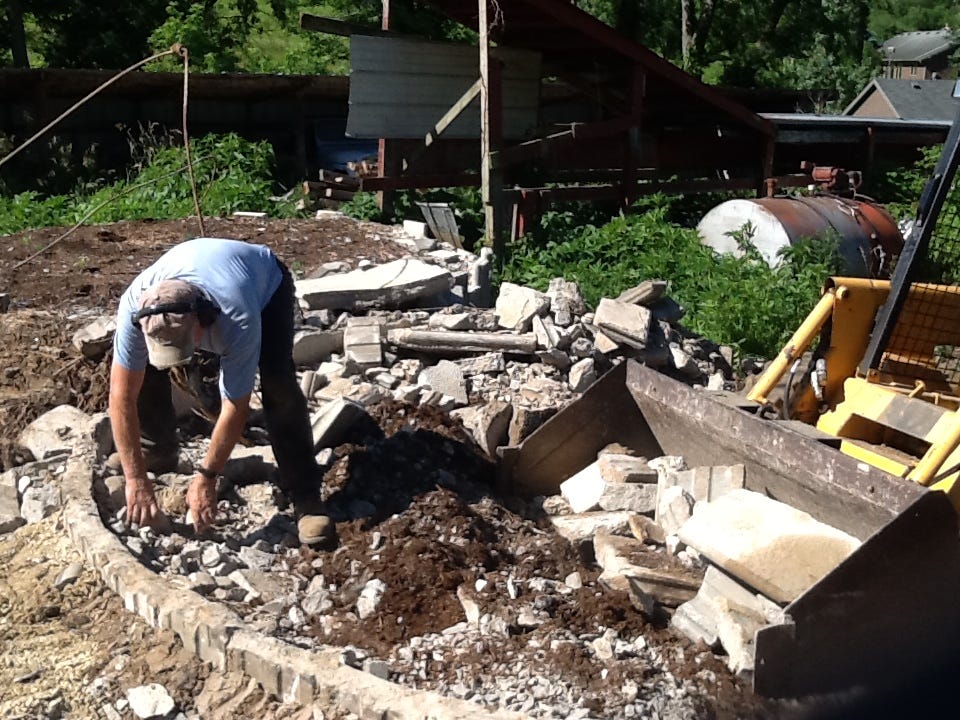
I remember when our silos and barn came down. I felt like I needed to do the cleanup as fast as I could. Part of that urgency came from wanting it out of sight and out of mind. There was a kind of guilt tied to it—those buildings had been a big part of my life.
It didn’t take long to realize that rushing wasn’t helping. What worked was taking small bites—an hour here, an evening there—after full days of inspections. Once I stopped pushing and settled into a steady pace, the work moved forward without wearing me down.
That doesn’t make for dramatic stories. It doesn’t look impressive from the outside. But it has saved me from wasting energy, damaging relationships, and forcing outcomes that were never going to hold anyway.
Learning when to stop pushing is really about learning trust—trust that not every problem needs immediate force, and not every delay is a setback.
Sometimes the most productive thing you can do is step back, loosen your grip, and let the next step reveal itself.
No matter what we have on our agendas, we do better when we approach them with a calm, reasonable mind. Life is too short to rush headlong into things that require patience to be done well.