


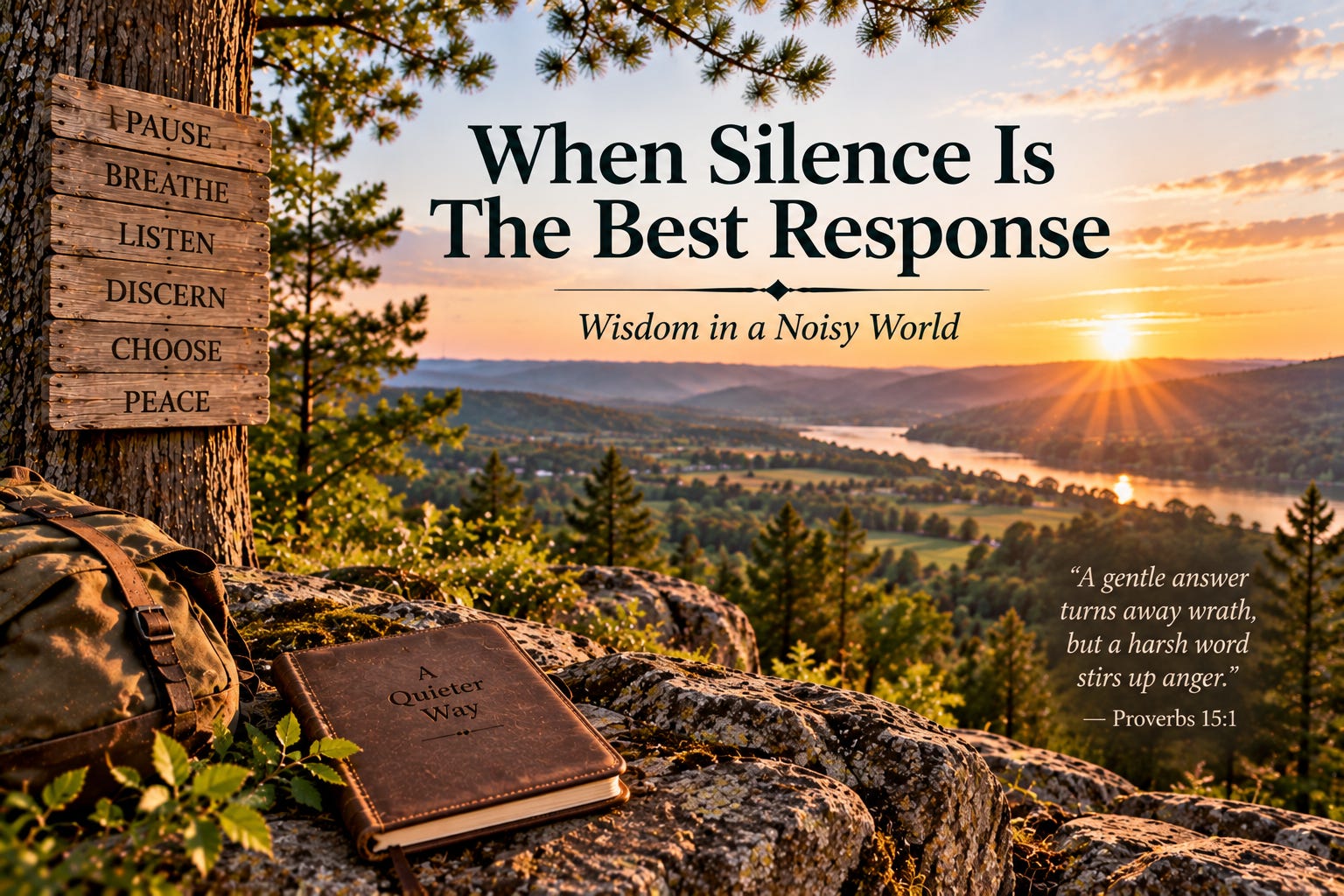
There was a time when I believed that speaking up was almost always the right thing to do. If something felt wrong, unfair, or misunderstood, my instinct was to step in and say something. Silence felt too much like agreement—or worse, weakness.
Life has a way of correcting that idea.
Over the years, I’ve learned that silence isn’t always avoidance. Sometimes it’s wisdom. Sometimes it’s restraint. And sometimes it’s the strongest response available.
Not every situation improves with more words. Some moments are already crowded with opinions, emotions, assumptions, and half-formed conclusions. Adding another voice doesn’t always bring clarity. Often, it just adds conflict or defensiveness.
Silence gives space for things to settle.
I’ve noticed that when I stay quiet instead of reacting immediately, something important happens. I begin to see more clearly. I hear what’s underneath the words being spoken. Frustration, fear, pride, exhaustion, those things become easier to recognize when I’m not busy preparing my reply.
Silence also reveals intentions, both mine and theirs.
There’s a difference between staying silent because you don’t care and staying silent because you care enough not to make things worse. One is disengagement. The other is discipline.
That distinction matters.
Some conversations don’t need winning. Some disagreements don’t need resolving in the moment. And some people aren’t actually asking for understanding—they’re asking for confirmation. Silence can be a quiet refusal to step into a fight that was never meant to be productive.
This doesn’t mean silence is always right. There are moments when speaking up is necessary—when harm is being done, when truth needs defending, when someone needs support. Silence in those cases can become neglect.
But those moments feel different.
They carry a weight that doesn’t fade with time. Silence in those situations doesn’t bring peace; it brings discomfort. That discomfort is often the signal that words are required.
The challenge is learning how to tell the difference.
I’ve found that silence is usually the better response when words would be driven by ego, irritation, or the need to be right. When I feel the urge to correct someone just so I can feel settled again, that’s often my cue to pause.
Silence has taught me patience. It has taught me humility. And more than anything, it has taught me that not every thought needs a voice to be valid.
Some of the most meaningful changes I’ve seen, in relationships, in understanding, in myself—didn’t come from what I said. They came from what I chose not to say, and when.
This feels especially important in this time of political division. Each side may have its points, but when arguments pit family, friends, and neighbors against one another, the cost can become higher than winning. Learning when to be silent may be one of life’s quieter forms of maturity.
Beautiful! The ability to allow others to have their own journey without feeling the need to inject my journeys discoveries into their reality. Knowing when to share and when to remain silent. I have not perfected it yet, but have realized that there are times when remaining silent is the right thing to do.