

For a long time, I thought legacy was something you left behind — accomplishments, property, a name remembered for certain things. It sounded like something measured after the fact, long after a person was gone.
That idea never quite fit.
The older I get, the more I see legacy as something that’s formed while you’re still living. It shows up in small, ordinary ways — often unnoticed at the time. Not in what you say about yourself, but in how others experience you.
Legacy isn’t built in big moments alone. It’s shaped in repeated ones. Like how you respond when things don’t go your way. It’s how you treat people when there’s nothing to gain. It’s how you show up when no one is keeping score.
I’ve noticed that much of what lasts isn’t intentional. It’s absorbed. The tone you set. The patience you offer. The steadiness you bring into a room. These things linger long after specific words or events fade.
Legacy also has less to do with control than we might like to think. You can’t manage how you’re remembered. You can only live in a way that’s consistent with what matters to you. What remains will be shaped by others, filtered through their own memories and experiences.
I used to think legacy required certainty — that you needed to know what you were building toward. Now I think it’s more about alignment. Living in a way that reflects your values, even when the outcome isn’t clear.
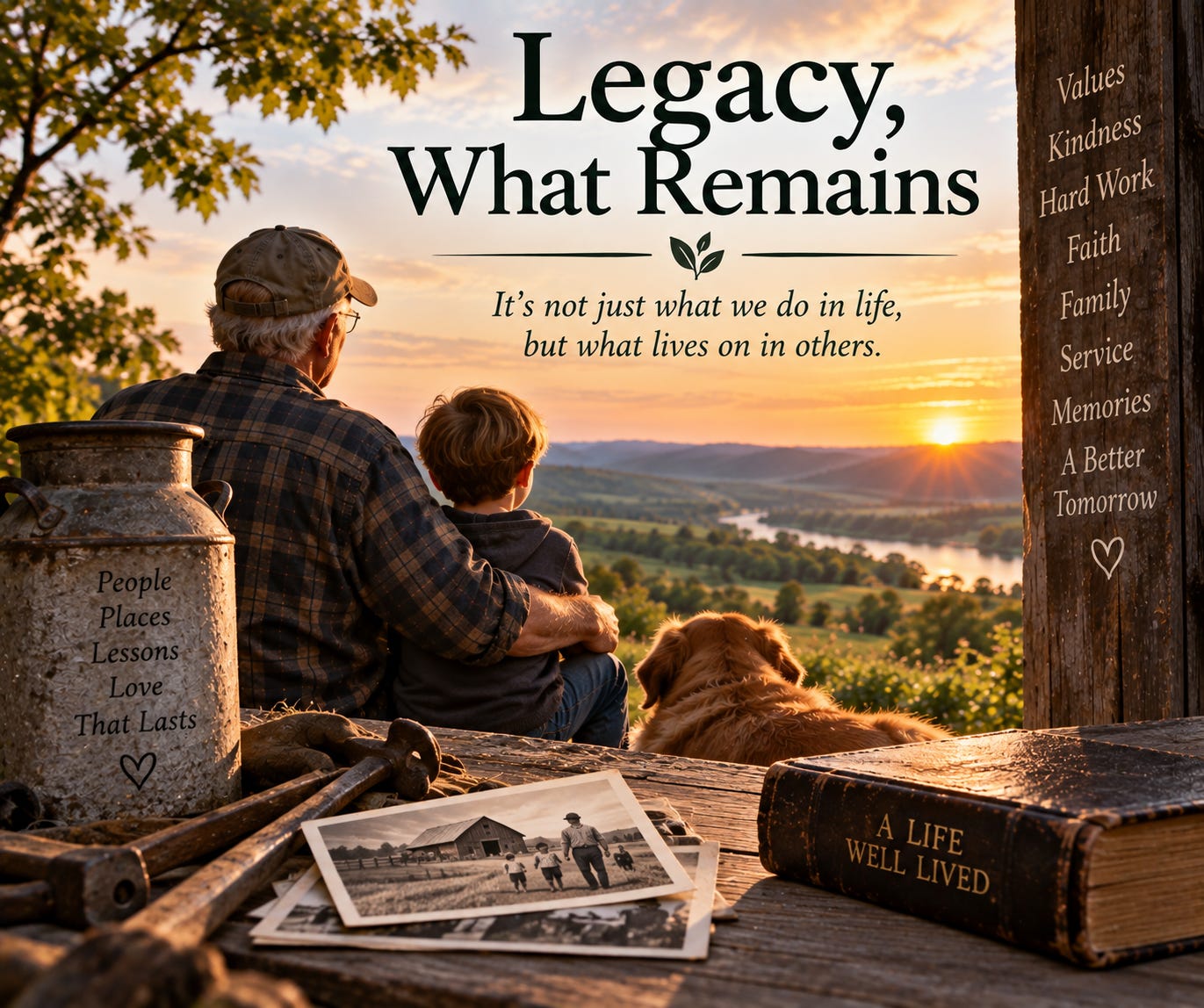
Legacy doesn’t have to be large to be meaningful. It can live in a habit passed on, a lesson learned quietly, a sense of safety someone felt in your presence. Often, the most important legacies are carried forward without ever being named.
As I’ve grown older, legacy feels less like something I’m leaving and more like something I’m participating in — a continuation of what I received, shaped by my own choices, and passed along in ways I may never fully see.
I remember my aunts and uncles very well. They were a major part of my childhood. There were many times when we kids stayed in their homes — during ordinary visits, and also during some of the hardest moments our family faced. When my mother lost two infants, when my older brother was taken by polio, and later when my mother herself passed away, we stayed with them.
From them, we learned far more than they ever set out to teach. We saw how they lived their lives. How they treated one another. How they handled responsibility, hardship, and care. That was their legacy — not something spoken, but something lived. The bonds formed during those years stayed strong well into later life.
Now, my wife and I have many occasions when our grandchildren stay with us. I hope, without forcing it, that we leave the same kind of impression on them — simply through closeness, consistency, and care. We were always involved in community events, especially when our girls were growing up, and we brought them along when it was appropriate. Those experiences mattered more than we realized at the time.
I’ve also had neighbors over the years who left their own kind of legacy — in how they cared for their families, their work ethic, and the way they contributed quietly to the community around them. None of it was flashy, but it lasted.
We’re meant to be stewards of what we’re given — land, animals, and responsibilities. I always tried to treat our farm animals with compassion, and I believe they felt it. In my later years, I’ve found myself unable to hunt. I feel a deep empathy for animals now and would rather see them live in peace, without fear. If that sensitivity carries forward to my grandchildren, I’d consider that a legacy worth leaving.
Maybe legacy isn’t about being remembered for what you did. Maybe it’s about how people feel when they remember you — whether they felt respected, understood, encouraged, or at ease.
And perhaps the truest legacy is this: living in a way that doesn’t need to be explained later. A life that, when looked back on, quietly makes sense.