


There’s another lesson work projects teach that doesn’t get talked about much — what happens when the work gets hard and doesn’t go as planned.
Every job starts with good intentions. The tools are ready. Spirits are up. Everyone thinks they know how it’s going to go. Then something breaks. The weather turns. Bodies tire faster than expected. That’s usually when the real classroom opens.
I’ve learned that effort reveals character most clearly when progress slows. Anyone can work when things are going well. It’s when frustration shows up that you see how people really operate — whether they pull together, pull away, or try to take control. When someone has matured, you can usually tell their character pretty quickly in a stressful situation. Their reactions say more than words ever could.
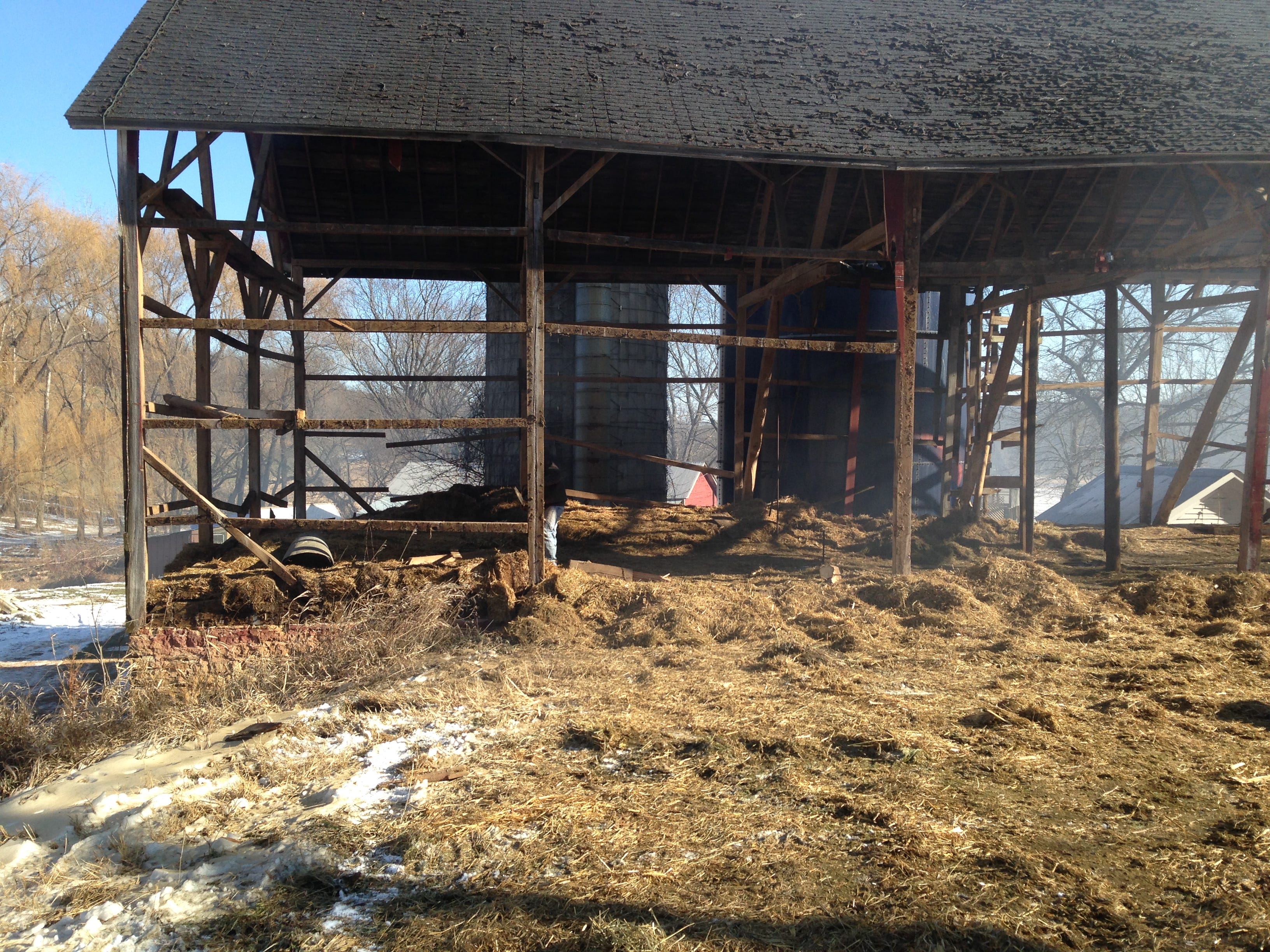
In past writings, I’ve mentioned farming from time to time. I have no shortage of stories where things went wrong, and I’ll mention just a few. Emotionally, one of the hardest things for me was when we had to take down our barn. It had been part of my life forever, as I was born and raised here. Because of its condition, it would have been too costly to rehabilitate, so we decided it had to come down. That still haunts me to this day.
There were also plenty of jobs that were physically hard. Tipping a chopper box over with a full load of silage that then had to be forked off by hand. A tractor running away from the uppermost hill with a baler and hay rack behind it. Cold winter days when chores started a little late, and a conveyor belt broke. The barn cleaner failing. The manure spreader web snapped and scattered chain links behind it with two feet of snow on the ground — first having to shovel it off with a four-inch-wide shovel, then retracing the route to find the broken links before heading to the heifer barn to feed them.
The list could go on and on, but I think you get the point. Anyone who has farmed for years understands this immediately and likely has similar stories of their own. These moments test your resolve and your ingenuity. There’s no one else to blame and no one to take over. In situations like that, your shift becomes an ongoing shift, and meals get delayed.
I’ve been on jobs where tempers flared. Words were said that probably shouldn’t have been — and I know I said some of them myself in my younger years. But more often than not, those moments didn’t last. There was still work to do, and the work itself had a way of quieting things down. You can only argue so long — even with yourself — when there’s a task waiting.
Some of the best teaching moments happen right there. Not through instruction, but through example. Someone keeps working when it would be easier to quit. Someone admits a mistake and fixes it without excuses. Someone slows down to help someone who’s struggling.
Those moments don’t make headlines, but they leave a mark.
I’ve noticed that younger people are watching closely during these times. They may not say anything, but they’re learning what perseverance looks like — not in theory, but in practice. Older hands may not even realize they’re teaching, but they are.
There’s also humility in hard work that doesn’t cooperate. You’re reminded of limits — of tools, of plans, and of yourself. That realization can either harden a person or ground them. I’ve seen it do both.
When a job pushes back, it strips away pretense. Titles matter less. Opinions matter less. What matters is who’s willing to stay, adjust, and see it through.
Maybe that’s another reason work environments make such good classrooms. They don’t let us hide. They teach patience, resilience, and respect — not by talking about them, but by demanding them. I think anyone who has worked for many years, in whatever profession, could make a similar list of hard jobs they’ve lived through themselves.
Because when the work gets hard, the lesson gets honest — and hopefully, the worker doesn’t give up.