


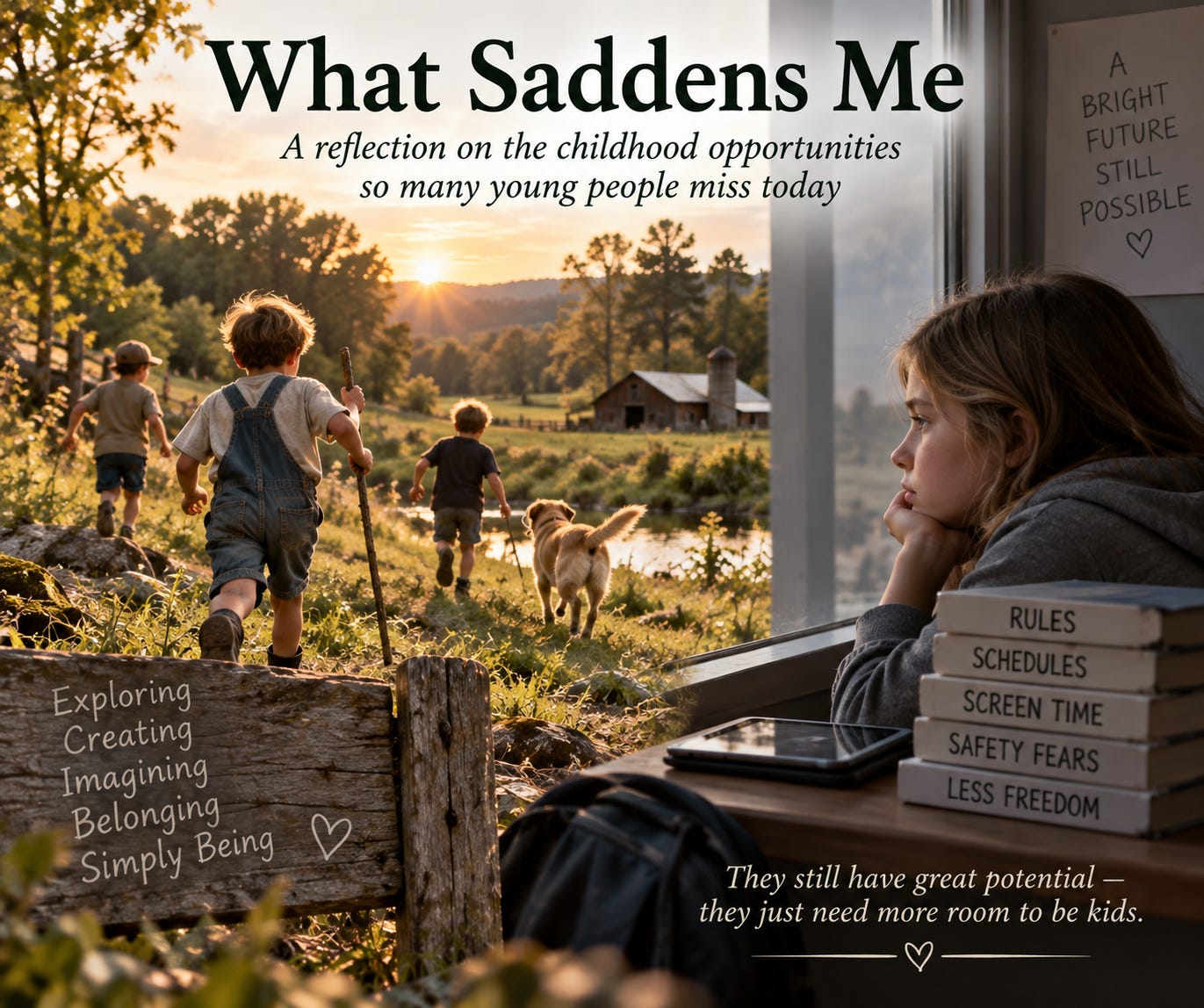
What saddens me is looking around and seeing a growing trend of young people who seem to have almost given up on getting ahead. I often wonder where this comes from. Could it be that many of us, as parents, have been too lenient with our kids?
Before World War II, times were very rough. If you did not work, you pretty much lived in poverty. There were exceptions, of course, but the principle was clear: gain usually came from effort and risk. If we fail to instill a solid work ethic—along with guidance and encouragement—what hope is there for the next generation?
If we give our children everything while they are growing up, how can we expect them to stand up to the challenges they will surely face later in life?
I see a parallel in nature with a mother cat. Once her kittens are old enough, she takes them out and places them where there is a food source—but one they must learn to hunt. Hunger becomes their motivation, yet the mother stays close by, watching carefully and stepping in only if necessary. As humans, we often believe making things difficult for our children is unacceptable, but struggle is often the very thing that teaches resilience.
Growing up in a farming community, we learned to be self-motivated. Not that long ago, the industry would often choose a farm kid over a city kid because they knew that, more often than not, they were getting a better worker. I look at my classmates from my earliest memories, and nearly all of them did quite well. Most moved away to better jobs or occupations. I stayed with the farm largely because my father’s health would not have allowed him to continue much longer on his own—and because I grew to love it.
So what can parents do today?
One practical step is to instill a work ethic early, paired with rewards for a job well done around the home or yard. Another is to tell stories—real stories—of successful people who took risks, worked hard, and failed before they succeeded. Young people need hope, not a steady diet of the idea that the world is simply a place where the rich get richer on the backs of everyone else.
I’ve often said that education is wasted on the young—not because learning isn’t valuable, but because the seriousness of it is rarely understood at that age. Most of what we learn may never be used directly, but learning how to learn is critical. If someone masters the basics, they can teach themselves whatever they need later in life—something that is far more accessible now than it ever was for previous generations.
With the advent of AI, choosing what skills to learn has become even more challenging, as many jobs will inevitably change or disappear. That said, industry has always evolved, and humanity has always adjusted. This time should be no different, though it will require wise counselors who truly understand these changes and can guide the next generation through them.
Getting back to the dangers of making early life too easy, there was a well-known “mouse utopia” study. Researchers placed a small number of mice into an enclosure capable of supporting thousands. Food was unlimited, water was plentiful, and shelter was abundant. Over successive generations, motivation declined sharply. Young mice became listless, isolating themselves or forming aggressive groups. Procreation dropped, social behavior broke down, and eventually the entire population died out.
The study was not about mice alone—it was a warning. What happens when everything is free, and effort is no longer required?
I will include a link to the study for those who want to explore it further. You may have to click, watch you tube at left.