


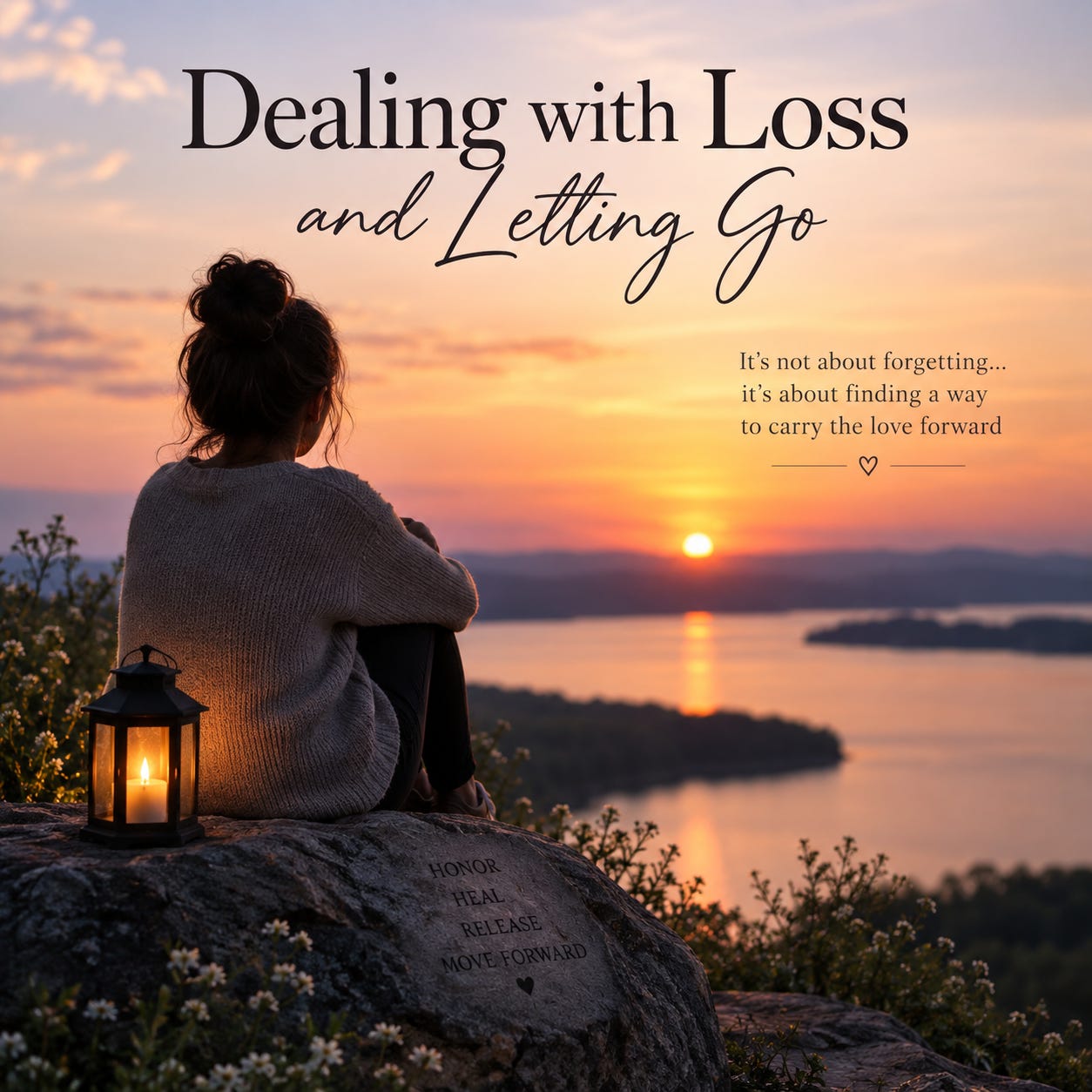
No matter who you are, you will experience loss in some manner or form. Loss doesn’t always arrive as a single event. It comes at odd times, often spread out over years, at various levels from pets to people. People tend to think of loss only as death, but life has many other ways of taking things from us. There are other losses such as career ends, abilities change, places we loved are sold, routines disappear, and people who once filled our days quietly drift away. It’s strange, but I actually mourned the loss of our old river bridges when they were torn down, as they had been a part of my whole life.
Learning to live well means learning how to let go, whether we’re ready or not.
When you’re young, loss hits hard and feels very unfair. You think there will always be time to fix things, repair relationships, or start over, but a sudden death can come before you’ve taken the time to tell them how you feel and how important they were in your life. In midlife, loss feels heavier. You begin to realize that some doors really do close, and not everything can be recovered. Later in life, loss might be seen as a part of life, but still very painful, especially depending on the relationship. Losing a spouse or a child or even a parent as a young child are some of the most difficult losses to work through, many times taking years or decades to process. It might not shock you as much, having experienced loss for most of one’s life in varying degrees, but it is still never easy.
One of the hardest mistakes people make is trying to stay the same after something important has ended. We tell ourselves that if we hold on tight enough, things won’t really change. Husbands or wives left behind many times do not clean out the closet of the other’s clothing or rearrange things in the home for years out of guilt or the feeling of losing their memories. But resisting reality usually creates more pain than the loss itself. Letting go isn’t giving up; it’s accepting that life has moved forward, whether we’re ready or not.
Grief doesn’t follow a straight line. It doesn’t arrive on schedule or leave when we expect it to. You can feel fine for months and then be undone by a smell, a season, or a familiar place. The mistake is thinking something is wrong with you when that happens. It isn’t that’s just how memory works.
Letting go doesn’t mean forgetting. It doesn’t mean pretending something never mattered. Some memories are meant to stay, not as anchors that hold us back, but as teachers that quietly shape how we move on. Over time, you learn how to hold gratitude and sadness at the same time. Both really can exist together.
Loss has a way of teaching lessons you don’t learn any other way. It softens your judgment of others. You stop assuming you know what someone is carrying. It sharpens your sense of what actually matters and makes you less patient with things that don’t. And it teaches respect for time, because time, once gone, doesn’t return.
Eventually, loss becomes something you carry forward rather than something pulling you backward. It becomes part of your story without becoming the whole story. You learn that moving on doesn’t mean leaving things behind; it means carrying them differently.
Letting go doesn’t mean you’re done loving.
It means you’re learning how to love in a new way.
Life will keep asking us to release things, plans, roles, people, and versions of ourselves. The work is not too hard because of that, but to stay open enough to keep living well anyway.